Description
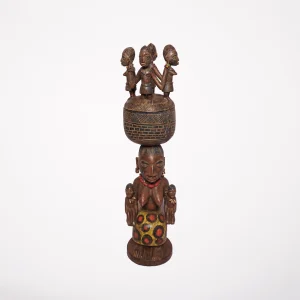
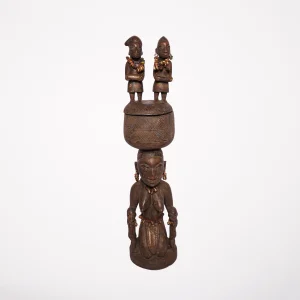
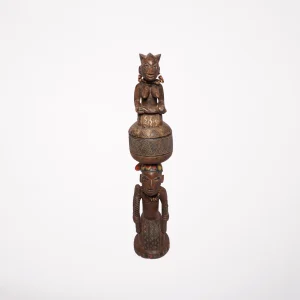
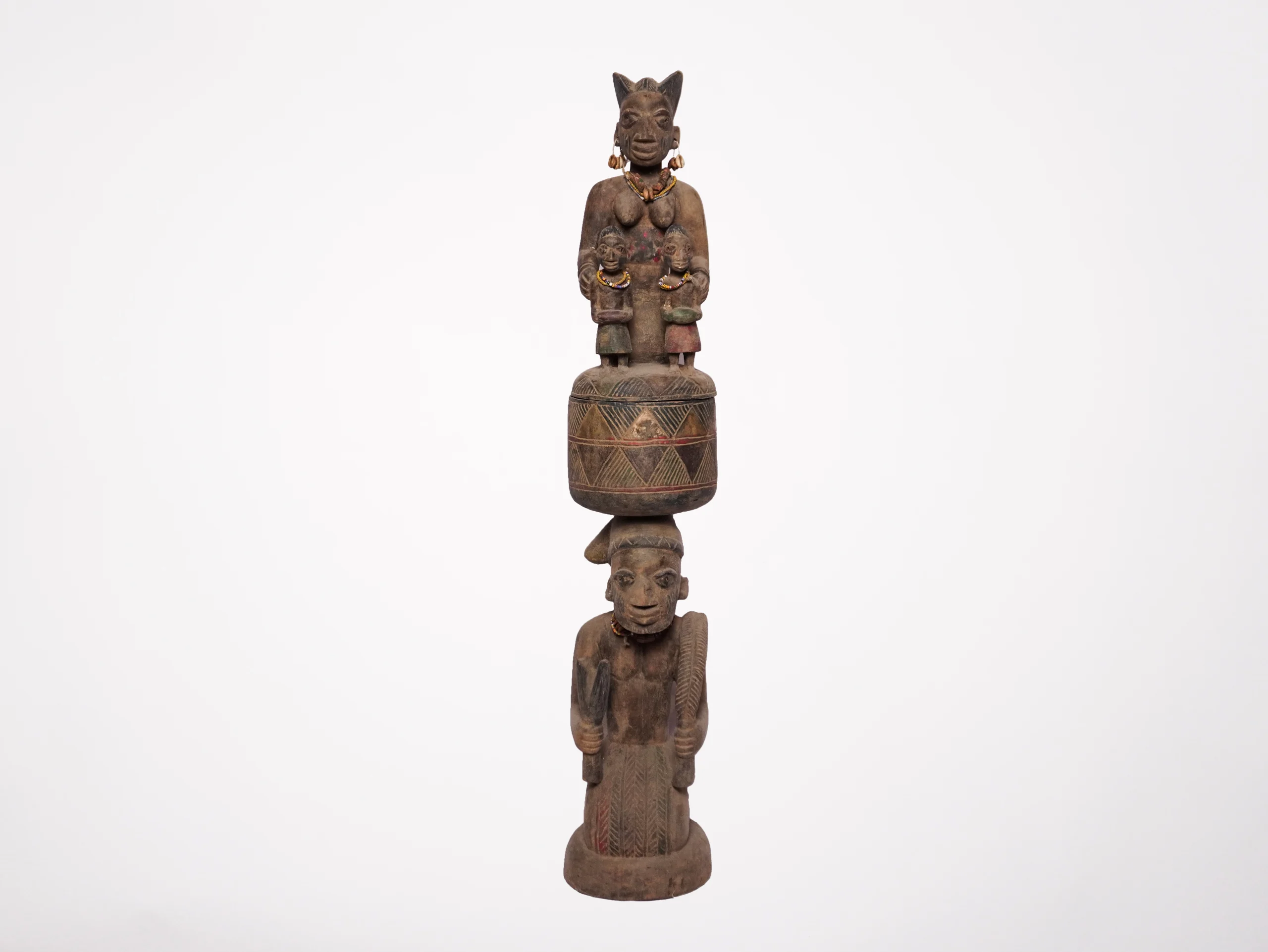
A Yoruba carved wooden pot statue, commonly known as an Agere Ifa, is a traditional vessel crafted by the Yoruba people of Nigeria and used in sacred rituals—particularly in Ifa divination. These statues are typically made from wood and serve as containers for items such as sacred palm nuts, kola nuts, or other offerings used in ceremonies dedicated to deities known as Orisha. Key Features and Purpose: Functionality: The carved pot serves as a ritual container, often placed on an altar during divination or offerings. Imagery and Symbolism: They frequently depict kneeling women—symbolizing humility and devotion—sometimes holding children or animals like roosters. These figures often carry the pot on their heads, reinforcing themes of service and motherhood. Spiritual Role: The statue serves as a physical and symbolic bridge between the human and spirit worlds. It honors the Orisha and is used to store items essential for invoking their presence and blessings. Craftsmanship and Design: Material: Usually carved from wood, sometimes incorporating other natural elements. The craftsmanship may include highly detailed patterns, motifs, and symbolic figures. Design Variations: While some Agere Ifa feature a single figure, others may present equestrian riders or birds—each with its own spiritual meaning. Lids may be carved as part of the statue, sometimes removable for storing offerings. Color and Finish: Though many are left unpainted to showcase the wood’s texture, some are accented with colors like white and blue, symbolizing purity and divine energy. Cultural Significance: These carved pots are not just art objects but are considered sacred tools in Yoruba religion. They are used in Ifa divination—a practice central to Yoruba spiritual life—and represent honor, service, fertility, and spiritual communication. Their design and usage reflect the Yoruba worldview, where every object carries both functional and spiritual weight.